
Why SEO Matters for Your Small Business
In the vast world of the internet, getting your small business noticed can be a challenge. That’s where SEO, or Search Engine Optimization, becomes your secret weapon. But what is it, and why should you care?
Imagine your business is a hidden gem in a bustling city. Without a map, people might struggle to find you. SEO is like putting your business on the map of the internet, helping potential customers discover what you have to offer.
In simple terms, SEO helps your business show up when someone searches for products or services you provide. So, if you want more people to find your small business online, understanding and implementing SEO is key. Stick with us, and we’ll guide you through the steps of DIY SEO for your small business success.
The Power of Being Seen Online for Your Small Business
In today’s digital age, having a strong online presence is like having a storefront on the busiest street in town. Think about it – when people need something, where do they look first? Online.
Your potential customers are out there, scrolling through the internet, searching for solutions to their needs. If your business isn’t visible in that online space, it’s like having a fantastic shop with the lights turned off.
A robust online presence ensures that your business is not hidden in the shadows but stands out in the crowded marketplace. It’s about being where your customers are and making it easy for them to find you when they’re looking for what you offer.
Just like a well-lit storefront attracts passersby, a strong online presence attracts internet users who could become your next customers. So, if you’re ready to shine a spotlight on your small business and make it unmissable in the digital world, let’s dive into the world of DIY SEO.
Keyword Research
Finding the Right Words: Why Identifying Relevant Keywords Matters
Imagine you’re in a conversation, and you use words that perfectly describe what you do. These words help people understand you better, right? Well, in the online world, your small business is having a constant conversation with search engines like Google.
Keywords are like the language your business speaks to be understood by search engines and, consequently, potential customers. These are the words and phrases that people type into search bars when looking for something specific. Identifying the right keywords for your business is like speaking the same language as your customers.
Think of it as a secret code – when you use the right words, search engines can match your business with what people are searching for. This is crucial for getting your business noticed. It’s not about using complicated jargon; it’s about using the words your customers are already using.
So, as we explore the DIY SEO journey, we’ll guide you on how to uncover these keywords and make sure your small business speaks the language of your potential customers. Ready to decode the secret of relevant keywords? Let’s dive in!
Your SEO Toolkit: Using Google Keyword Planner for Keyword Magic
Alright, let’s talk tools – specifically, the Google Keyword Planner. Think of it as a treasure map guiding you to the words and phrases that can unlock the potential of your small business online.
Google Keyword Planner is like a helpful friend who knows the language people use when searching for businesses like yours. It’s a free tool that takes the guesswork out of figuring out what words will resonate with your potential customers.
Here’s how it works: you type in a few words related to your business, and the planner reveals a list of keywords along with insights into how often people search for them. It’s like getting insider information on what your customers are looking for!
By using Google Keyword Planner, you can discover the words that will make your business more visible to those searching online. It’s like having a cheat sheet for the language of the internet.
As we navigate the DIY SEO path, we’ll show you how to harness the power of Google Keyword Planner, making sure your small business speaks the same language as your customers. Ready to uncover the magic of keywords? If you don’t have or want to have a Google Ads account, then you can also use Google Trends!
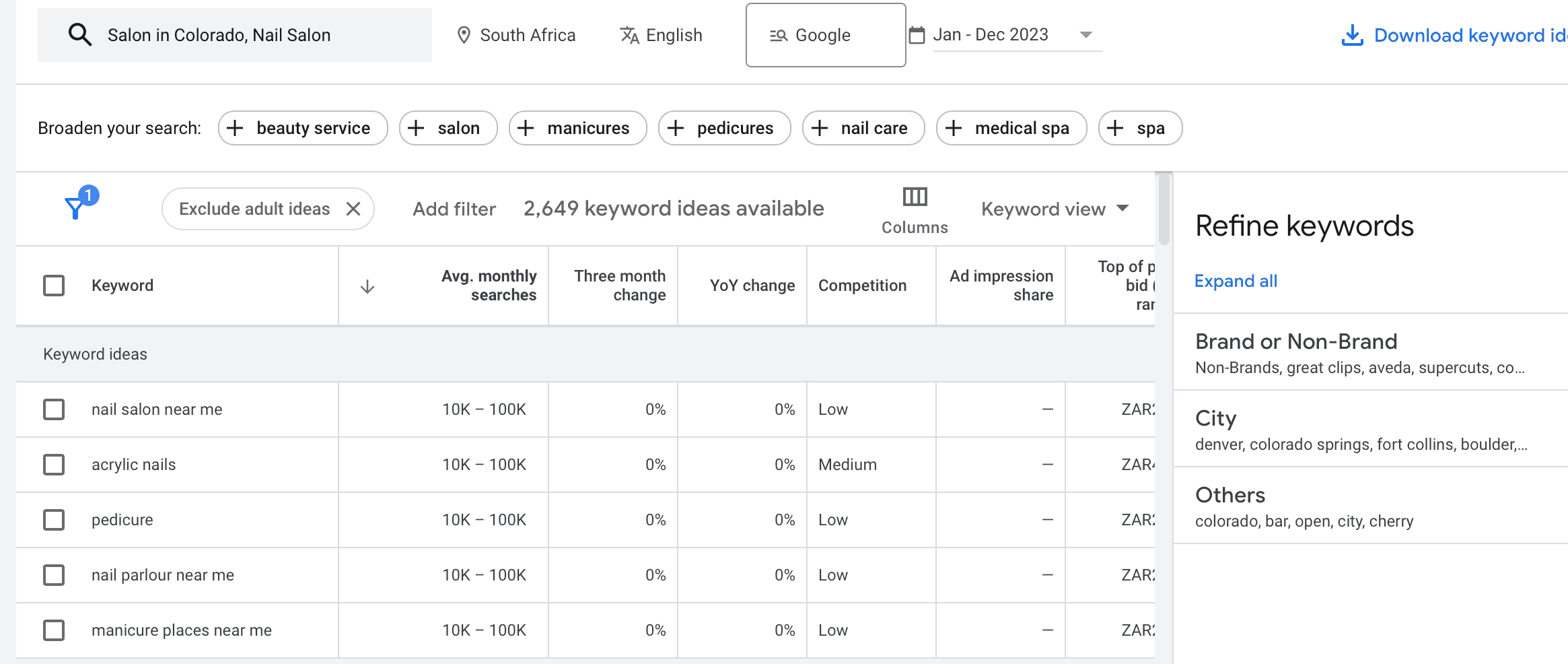
Beyond the Basics: The Magic of Long-Tail Keywords
Now that we’ve dipped our toes into the world of keywords, let’s talk about a special kind – long-tail keywords. Think of them as the unique phrases that make your small business stand out in a sea of online chatter.
While regular keywords are like broad strokes, long-tail keywords are the intricate details that set you apart. They are specific and often reflect what makes your business special. Consider them the secret sauce of your online presence.
Let’s break it down: if regular keywords are like saying “shoes,” a long-tail keyword would be more like “comfortable running shoes for beginners.” See the difference? Long-tail keywords help you reach the people who are looking for precisely what you offer.
Why focus on long-tail keywords? Well, it’s like having a conversation with someone who understands your business on a deeper level. When potential customers use these specific phrases in their searches, your business is more likely to be the answer they’ve been looking for.
As we navigate the DIY SEO landscape, we’ll guide you on how to find and incorporate these unique long-tail keywords. Ready to make your small business shine with specificity? Below are some examples of long-tail keywords that might be used for some small businesses, as you can see they look a bit like the kind of thing that a potential client might search Google for.
Long Tail Keyword Examples
- Cake Shop:
- “Custom fondant birthday cakes in [Your City]”
- “Vegan wedding cake options near me”
- “Specialty cupcakes for baby showers”
- Plumber:
- “Emergency plumbing services 24/7”
- “Certified residential pipe leak repair”
- “Affordable water heater installation [Your City]”
- Handyman:
- “Professional home repair and maintenance services”
- “Carpentry and shelving installation expert”
- “Quick and reliable electrical repairs [Your City]”
- Hair Salon:
- “Balayage hair coloring specialists in [Your City]”
- “Keratin treatment for frizzy hair”
- “Modern bridal updos and styling”
- Nail Salon:
- “Gel manicures with unique nail art designs”
- “Pedicures for diabetics in [Your City]”
- “Eco-friendly and toxin-free nail treatments”
These examples demonstrate how long-tail keywords capture specific services or qualities that set each business apart. Integrating these phrases into your content helps your small business attract the right audience searching for exactly what you offer.
On-Page SEO
Unlocking Visibility: Understanding On-Page SEO for Small Businesses
Now that we’ve got our keywords in hand, let’s talk about a powerful tool called On-Page SEO. Think of it as your business’s personal tour guide, showing search engines around and highlighting the best features of what you offer.
On-Page SEO is all about making your website as friendly as possible to search engines. Why does this matter? Well, when search engines like Google scan your website, they want to understand what it’s all about. The better they understand, the more likely they are to recommend it when people search for related things.
It’s like arranging your shop window to showcase your best products – in this case, your content and services. On-Page SEO involves tweaking elements on your actual website to make sure search engines see it as valuable and relevant.
From the words you use to the structure of your pages, On-Page SEO is your way of communicating with search engines, saying, “Hey, here’s what my business is about, and it’s worth checking out!”
So, as we continue our journey into the world of DIY SEO, we’ll guide you through the steps of On-Page SEO, ensuring your small business leaves a lasting impression on both search engines and potential customers. Ready to make your website the star of the show? Let’s dive in!
Dress Your Website for Success: Optimizing Meta Titles, Descriptions, and URLs
Imagine your website is a beautifully wrapped present. Now, imagine the meta titles, descriptions, and URLs as the stylish tags and ribbons that make that gift irresistible. This is where the art of On-Page SEO comes into play – making sure your website looks as good to search engines as it does to your visitors.
Meta Titles: These are like the headlines of your pages, the attention-grabbers. Imagine a book with a captivating title – you’d want to know more, right? That’s what a well-optimized meta title does for your web pages. It tells search engines and visitors what to expect.
Meta Descriptions: Think of meta descriptions as the intriguing back cover blurb of a book. It provides a concise summary of what’s inside. When you optimize your meta descriptions, you’re creating a compelling snippet that encourages people to click and explore your page.
URLs: URLs are like the addresses to specific pages on your website. Optimizing them means making them clear and relevant. A clean, well-structured URL is not only easier for search engines to understand but also more inviting for visitors to click on.
So, as we continue our journey through the DIY SEO landscape, we’ll guide you in crafting meta titles, descriptions, and URLs that make your small business website irresistible. Ready to give your website the makeover it deserves? Let’s continue the adventure!
Empowering Your Website: SEO Plugins and On-Page Excellence
Now that we’ve touched on the artistic side of your website with meta elements, let’s bring in some tech magic – SEO plugins. These are like your website’s behind-the-scenes assistants, helping you fine-tune the technical aspects of On-Page SEO. One standout SEO plugin we recommend is Rank Math for WordPress, but others like Yoast SEO and All in One SEO Pack can also lend a hand.
These plugins won’t magically make your website an SEO superstar, but they are invaluable guides on your journey. Think of them as your personal SEO coach, pointing out areas for improvement and providing insightful tips.
They’ll remind you to add Alt Titles to your images – like adding captions to a photo album, it helps search engines understand what’s in the picture. They’ll nudge you to include internal and external links – connections that strengthen the credibility of your content.
These tools also emphasize the importance of rich media – images, videos, and other engaging content that keeps visitors on your page longer. And guess what? Search engines love it too. Additionally, they’ll guide you on content length, making sure your articles aren’t too short to provide value or too long to lose reader interest.
Here’s a golden nugget: when crafting your articles, blogs, or product pages, weave in your keywords naturally. It’s like sprinkling the essence of your business throughout your content, making it more appealing to both users and search engines.
Remember, these plugins are your companions, not miracle workers. They provide recommendations, but the final touch is in your hands. As you explore the capabilities of these SEO plugins in our DIY SEO journey, you’ll discover how to align your website with best practices. Ready to empower your website with these digital assistants? Let’s continue the exploration!
Building a Foundation: The Power of Well-Structured Content
Now, let’s shift our attention to the heart of your website – the content. When we talk about well-structured content, think of it as creating a roadmap for both your visitors and search engines. It’s like designing a clear, organized menu for a restaurant, making it easy for everyone to find what they’re looking for.
What does well-structured content look like? Let’s break it down. Consider breaking your content into sections with headings (H1, H2, H3, etc.). Imagine these headings as signposts, guiding readers through your content and giving search engines a hierarchy of information.
For example:
Heading 1: The Main Topic
- This could be the main title of your page or blog post.
Heading 2: Subtopics
- Break down your content into meaningful subtopics. Each subtopic can have its own heading (H2).
Heading 3: Subtopics Under Subtopics
- If needed, you can further divide subtopics into smaller sections with H3 headings.
Why is this good? Well-structured content benefits both your audience and search engines. Visitors can easily scan your page to find the information they need, improving their experience. For search engines, it provides a clear understanding of the context and hierarchy of your content, making it more likely to appear in relevant searches.
In the DIY SEO journey, we’ll guide you on how to structure your content effectively, creating a user-friendly experience and signaling to search engines that your content is organized and valuable. Ready to build a strong foundation for your website’s success? Let’s continue the exploration!
Google My Business (GMB)
Your Business on the Digital Map: Unveiling Google My Business (GMB)
Enter Google My Business (GMB) – your small business’s digital passport to the online world. Picture it as your storefront’s digital signage on the busiest street in town, drawing in potential customers with essential information about your business.
GMB is a free and powerful tool provided by Google, acting as a virtual business card for your enterprise. It displays crucial details like your business name, address, phone number, and operating hours. But it doesn’t stop there – you can showcase photos, share updates, and even interact with customer reviews.
Now, let’s talk about a term you’ll often hear in connection with GMB – “local SEO.” Local SEO is like putting your business on the local map of the internet. When someone nearby searches for a service or product you offer, local SEO ensures that your business shows up prominently in those search results.
Here’s why GMB is a game-changer for your local SEO: when your business information is accurate and consistent across online platforms, search engines gain confidence in recommending your business to users in your area. It’s about making sure you’re not just online but discoverable by those who need what you offer locally.
As we delve deeper into the DIY SEO journey, we’ll guide you on maximizing the potential of Google My Business, ensuring your small business doesn’t just exist online but thrives in the local digital landscape. Ready to put your business on the map? Let’s continue the exploration!
Claiming Your Spot: Optimizing Google My Business for Local SEO
Now that we’ve introduced the concept of Google My Business (GMB), it’s time to roll up your sleeves and claim your digital spot. Think of claiming your GMB listing as officially staking your claim on the digital map, letting Google and potential customers know that you’re open for business.
1. Claiming Your GMB Listing:
- Visit the Google My Business website and sign in with your Google account.
- Locate your business on the map and follow the prompts to claim it. If your business isn’t listed, you can create a new listing.
2. Accurate Business Information:
- Ensure your business name, address, and phone number are accurate and consistent with your other online platforms. This consistency builds trust with both users and search engines.
3. Operating Hours and Services:
- Provide your business hours so that customers know when to visit or contact you.
- Highlight the services you offer to give potential customers a clear understanding of what makes your business special.
4. Captivating Visuals:
- Upload high-quality images showcasing your business, products, and services. Visual content not only attracts users but also enhances your online presence.
5. Engaging with Reviews:
- Respond to customer reviews, both positive and negative. This interaction not only shows your appreciation for positive feedback but also demonstrates your commitment to addressing concerns.
6. Regular Updates:
- Keep your GMB listing up-to-date with any changes to your business information. Regularly post updates, promotions, or events to keep customers informed and engaged.
Why does this matter for local SEO? When your GMB listing is claimed and optimized, it becomes a trusted source of information for both users and search engines. Accurate and detailed information enhances your local SEO, making it more likely for your business to appear in local search results.
As we guide you through the DIY SEO journey, optimizing your GMB listing will be a crucial step in boosting your business’s visibility in the local digital landscape. Ready to claim your spot on the digital map? Let’s continue the exploration!
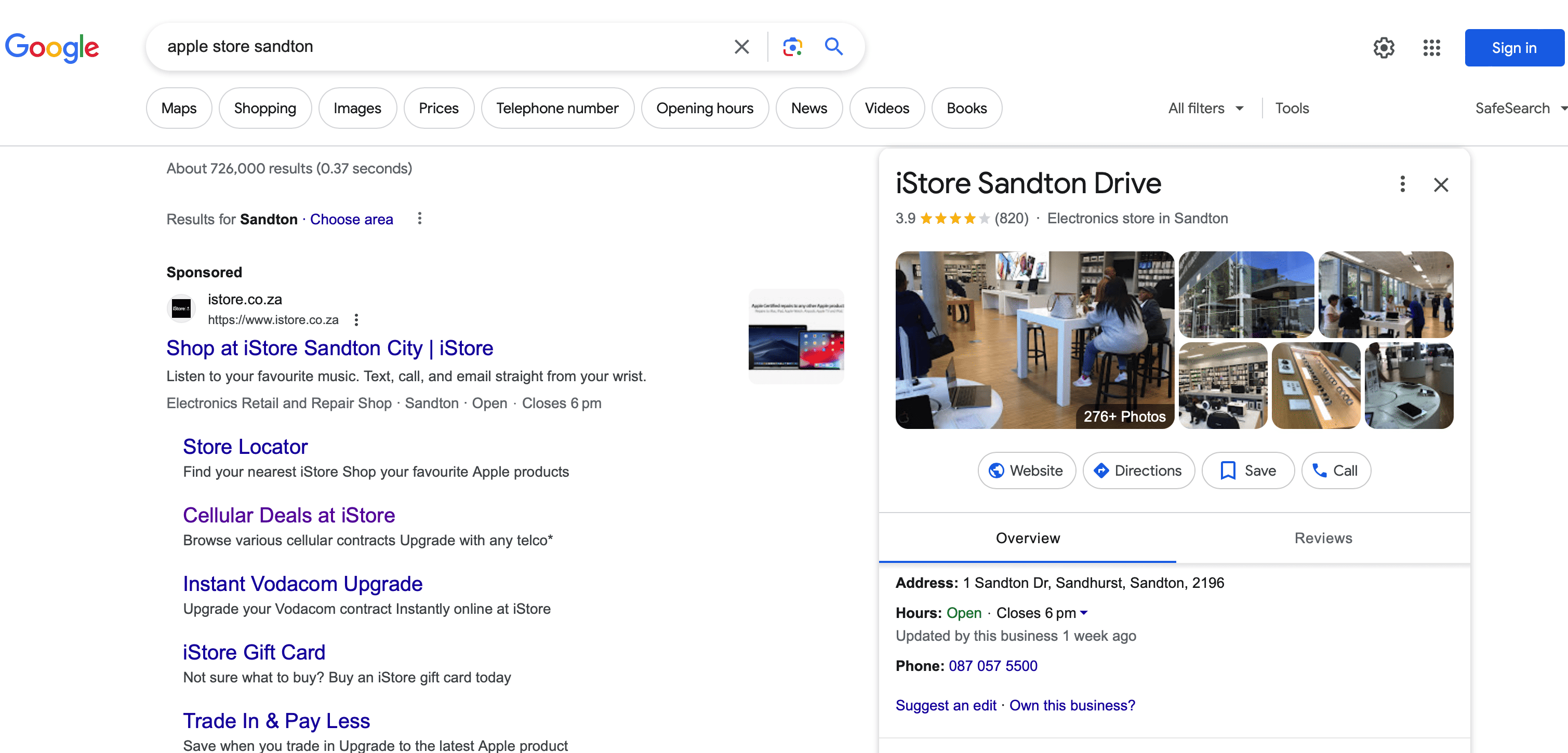
Precision Matters: Providing and Updating Accurate Business Information
Imagine your business information as the key details on a treasure map – accuracy is the key to guiding potential customers to your doorstep. When you provide precise and up-to-date information on your Google My Business (GMB) listing, you’re not just helping customers; you’re boosting your local SEO.
1. Name, Address, Phone Number (NAP):
- Your business name, address, and phone number form the foundation of your digital identity. Ensure they are accurate and consistent, and match the information on your website and other online platforms.
2. Business Hours:
- Think of your operating hours as your business’s availability schedule. Update them regularly to reflect any changes, especially during holidays or special events.
3. Services Offered:
- The services you provide tell potential customers what to expect. Keep this information current to align with your business offerings.
4. Website URL:
- If you have a website (which you should!), include the correct URL. It’s like providing the address to your online home.
5. Special Attributes:
- If your business has specific attributes like wheelchair accessibility or free Wi-Fi, make sure these details are accurate. It’s about providing a complete picture for your customers.
Why Does Accuracy Matter? When your business information is accurate and consistent across various online platforms, it builds trust with both users and search engines. Think of it as updating your business hours on the door of your physical store – it ensures that customers aren’t disappointed, and it signals to search engines that your information is reliable.
In the DIY SEO journey, we’ll guide you on keeping this treasure map of information accurate and updated. Ready to provide your potential customers with a clear path to your business? Let’s continue the exploration!
Customer Voices Matter: Encouraging Reviews for Local SEO
Reviews are like the conversations customers have about your business in the digital world. Encouraging customers to leave reviews on your Google My Business (GMB) listing not only provides valuable insights but also plays a significant role in boosting your local search rankings.
Encouraging Positive Reviews:
- Politely ask satisfied customers to share their experiences on your GMB listing. You can do this through in-store signage, social media, or even through a follow-up email.
- Highlight the benefits of leaving a review, such as helping others discover your business or providing constructive feedback.
Why Positive Reviews Matter: Positive reviews act as a virtual thumbs-up from satisfied customers. They not only influence potential customers but also contribute to your local SEO. Search engines consider businesses with positive reviews as more trustworthy and relevant, thus improving your chances of appearing in local search results.
Dealing with Negative Reviews: Even the best businesses may encounter a negative review. It’s essential to handle these situations professionally:
- Respond promptly and professionally. Acknowledge the concern and express a genuine desire to address the issue.
- Take the conversation offline by providing contact information for further discussion. This shows other potential customers that you are proactive in resolving concerns.
- Learn from feedback. Use negative reviews as an opportunity to improve your business and showcase your commitment to customer satisfaction.
Remember, a mix of reviews, both positive and negative, adds authenticity to your business. In the DIY SEO journey, we’ll guide you on navigating the world of online reviews, turning them into a powerful tool for enhancing your local SEO. Ready to let your customer voices echo positively online? Let’s continue the exploration!
Content is King
Crafting Excellence: Creating High-Quality, Informative Content
Now, let’s talk about the heart and soul of your online presence – your content. In the world of DIY SEO, content is not just about quantity; it’s about delivering high-quality, informative material that resonates with your target audience.
Understanding Your Audience:
- Before putting pen to paper, or fingers to keyboard, understand who your audience is. What are their needs, questions, and challenges? Tailor your content to address these aspects.
Quality over Quantity:
- Rather than focusing on churning out a large volume of content, emphasize the quality of each piece. Provide depth, insight, and solutions that genuinely benefit your audience.
Educate and Engage:
- Your content should not just showcase your business; it should educate and engage. Offer insights, answer common queries, and provide value that makes your audience want to return for more.
Clear and Concise:
- Keep your content clear and concise. Break down complex topics into digestible pieces, making it easy for your audience to understand and absorb the information.
Visual Appeal:
- Enhance your content with visuals – images, infographics, and videos. A well-designed visual element not only adds appeal but also aids in conveying information more effectively.
Why Quality Matters: High-quality content serves as a magnet for both users and search engines. When your content is informative, well-structured, and valuable, it not only keeps visitors on your site longer but also signals to search engines that your website is a reliable source of information.
In the DIY SEO journey, we’ll guide you in creating content that not only meets but exceeds the expectations of your target audience. Ready to captivate and educate with your content? Let’s continue the exploration!
The Rhythm of Engagement: Regularly Updating Your Website with Fresh, Relevant Content
Imagine your website as a lively conversation – it needs to keep evolving and bringing something new to the table. In the realm of DIY SEO, regularly updating your website with fresh, relevant content is akin to adding exciting chapters to your business story.
Embrace the Blogging Culture:
- Introduce a blog section on your website where you can share insights, advice, and updates related to your business. This could include how-to guides, success stories, or behind-the-scenes looks at your latest projects.
Consistency is Key:
- Establish a posting schedule that suits your business rhythm. Whether it’s weekly, bi-weekly, or monthly updates, consistency is crucial. It keeps your audience anticipating new content and enhances your website’s reliability.
Diversify Your Content:
- Don’t limit yourself to text-only posts. Embrace a variety of content types, including images, infographics, videos, and customer testimonials. Each piece contributes to a rich and engaging user experience.
Customer Spotlights:
- Showcase your successes by highlighting projects you’ve completed or sharing positive customer experiences. Include high-quality images to visually demonstrate the quality of your work.
Educate and Inform:
- Use your blog as a platform to educate your audience. Share tips, industry insights, or even common challenges your customers face, offering solutions that position you as an expert in your field.
SEO Benefits of Regular Updates: Consistent updates signal to search engines that your website is active and relevant. It enhances your website’s authority, making it more likely to appear in search results. Frequent updates also encourage visitors to return, fostering a sense of community around your brand.
In our DIY SEO journey, we’ll guide you on establishing a content strategy that not only keeps your website vibrant but also attracts and retains an engaged audience. Ready to tell your business story through regular updates? Grab a coffee and let’s continue the exploration!
Crafting Coherence: Naturally, Incorporate Keywords within Your Content
Imagine keywords as the thread weaving through the fabric of your content, binding it together seamlessly. In the realm of DIY SEO, incorporating keywords naturally is an art that enhances both readability and search engine visibility.
Understanding Keyword Placement:
- Identify the primary and secondary keywords related to your content. These should align with the topics you’re discussing or the services you’re offering.
Strategic Placement in Headings:
- Integrate your primary keyword into headings (H1, H2, H3) where it naturally fits. Think of headings as signposts guiding both readers and search engines through your content.
In the Introduction and Conclusion:
- Gently introduce your primary keyword in the introduction, setting the tone for what’s to come. Revisit it in the conclusion, summarizing the key points.
Within the Body:
- Sprinkle secondary keywords naturally throughout the body of your content. It’s like seasoning a dish – use just enough for flavor without overwhelming the palate.
In Image Alt Text:
- If your content includes images, incorporate keywords into the alt text. This not only enhances accessibility but also provides additional context to search engines.
Why Natural Integration Matters: When keywords are seamlessly integrated into your content, it creates a harmonious reading experience for visitors while sending clear signals to search engines about your content’s relevance. Natural integration avoids the pitfalls of keyword stuffing, ensuring that your content is both informative and search engine-friendly.
Here is an example of 3 long tail keywords, and how they have been added to content
Long-Tail Keywords for Kitchen Renovation:
- “Custom farmhouse kitchen design ideas”
- “Energy-efficient kitchen appliances installation”
- “Budget-friendly kitchen remodeling tips”
Paragraph: Are you dreaming of a kitchen transformation that combines elegance with practicality? Our team specializes in creating custom farmhouse kitchen designs that bring your vision to life. Picture energy-efficient appliances seamlessly integrated into your newly renovated space, ensuring both style and sustainability. Worried about the budget? Fear not, as our experts are here to guide you with budget-friendly kitchen remodeling tips, making sure every penny is wisely invested in creating a space that reflects your taste and meets your practical needs. From the initial design concept to the installation of energy-efficient appliances, we’re committed to turning your kitchen renovation dreams into a reality.
In our DIY SEO journey, we’ll guide you on the delicate art of keyword incorporation, helping you strike the perfect balance that appeals to both your audience and search engines. Ready to weave keywords into the fabric of your content effortlessly? Let’s continue the exploration, we are about halfway now, I promise.
Rich Media and Visuals
Vivid Narratives: Elevating Your Content with Rich Media and Visuals
In the digital landscape, words paint a picture, but rich media and visuals bring that picture to life. In our exploration of DIY SEO, we delve into the significance of incorporating images and video seamlessly into your content. Original, high-quality visuals serve as a window into your world, offering potential clients a clear view of your expertise and craftsmanship.
Why Original Images Matter:
- Authenticity and Transparency: Original images showcase your work in its true form, providing transparency and authenticity that resonates with potential clients.
- Visual Appeal: Quality visuals enhance the visual appeal of your website, capturing attention and creating a lasting impression.
- SEO Boost: Search engines value original images as they contribute to a unique and valuable user experience, potentially boosting your SEO.
The Impact of Video Content:
- Dynamic Storytelling: Video allows you to tell a dynamic story. Consider showcasing before-and-after footage of your work, immersing viewers in the transformative journey of your projects.
- Engagement: Video content has a higher engagement rate. It keeps visitors on your site longer, signaling to search engines that your content is compelling and worth exploring.
As we navigate the realm of DIY SEO, we’ll guide you on integrating rich media and visuals effectively, ensuring that your content not only informs but also captivates. Ready to let your work speak volumes through vivid narratives?
Elevating Experience: Compelling Visuals for Enhanced User Engagement
Imagine your website as a visual masterpiece, where each image and video serves a purpose beyond mere decoration. In the realm of DIY SEO, compelling visuals, including high-quality images and engaging videos, are the brushstrokes that enhance user experience. These visuals not only inform but captivate, ensuring that your audience stays immersed in the story you’re telling.
The Power of Visual Engagement:
- Informative Imagery: Every image should tell a story – whether it’s showcasing completed projects, demonstrating your process, or presenting your team. Each visual element should contribute to the overall narrative of your business.
Originality in Imagery:
- Build Trust: Original images build trust with your audience. Potential clients want to see real examples of your work, and nothing speaks louder than images that authentically represent your craftsmanship.
The Dynamics of Video:
- Before-and-After Footage: If a picture is worth a thousand words, a video is a novel. Consider incorporating before-and-after footage to dynamically showcase the transformation your services bring.
Optimizing Loading Times: Ensuring Smooth Performance
In the fast-paced world of the internet, speed is paramount. In our DIY SEO journey, we address the importance of optimizing multimedia elements for faster loading times. A speedy website not only enhances user experience but also contributes to improved site performance.
Efficient Image Compression:
- Maintain Quality: While compressing images, ensure that quality remains intact. Strike a balance that reduces file size without compromising clarity, optimizing loading times without sacrificing visual appeal.
Lazy Loading for Videos:
- Load Strategically: Implement lazy loading for videos. This technique ensures that videos load only when they come into the user’s viewport, preventing unnecessary loading times for content not immediately visible.
Browser Caching for Speed:
- Repeat Visits: Enable browser caching to store static files on users’ devices. This reduces the need for re-downloading resources, making subsequent visits to your site faster and more efficient.
As we guide you through the optimization journey in DIY SEO, we’ll help you strike the perfect balance – ensuring that your visuals are not just compelling but also contribute to a seamless and speedy user experience. Ready to captivate your audience with efficiency and finesse?
CTAs for Engagement (Call To Action)
Guiding Actions: Unveiling the Power of Call-to-Action (CTA) Buttons
In the realm of online engagement, Call-to-Action (CTA) buttons are the silent prompts that invite visitors to take meaningful actions on your website. As we explore DIY SEO, understanding the essence of CTAs becomes pivotal. A CTA is essentially a prompt that encourages users to take specific actions, transforming passive visitors into active participants in your business journey.
What is a CTA?
- Defined Prompts: A Call-to-Action is a prompt designed to elicit an immediate response from the user. It can take the form of a button, link, or even a sentence, guiding users on the next steps to interact with your business.
Strategic Placement:
- Above the Fold: Consider placing CTAs prominently, especially above the fold. This ensures that visitors see them without scrolling, increasing the likelihood of engagement.
- In Relevant Sections: Insert CTAs strategically within relevant sections of your content. For example, a CTA to schedule a consultation could be placed near a section showcasing your services.
Encouraging Specific Actions:
- Contact Us: If your goal is to encourage inquiries, place CTAs inviting visitors to contact you for more information. Include forms or clickable buttons that streamline the communication process.
- Newsletter Subscription: If building a subscriber base is a priority, incorporate CTAs prompting visitors to subscribe to newsletters. Offer incentives like exclusive content or discounts to entice sign-ups.
- Make a Purchase: For e-commerce websites, strategically position CTAs guiding users to make a purchase. Use persuasive language and clear visuals to encourage conversions.
Adding CTAs to Your Site:
- Button Integration: Incorporate visually appealing buttons with clear, action-oriented text. Phrases like “Contact Us,” “Subscribe Now,” or “Shop Here” convey a sense of urgency and purpose.
- Use of Color and Contrast: Make CTAs stand out by using contrasting colors that complement your website’s overall design. The goal is to attract attention without overwhelming the visual harmony.
- A/B Testing: Experiment with different CTA placements, wording, and designs through A/B testing. This helps identify what resonates most effectively with your audience.
As we guide you through DIY SEO, we’ll unravel the art of creating enticing CTAs that spark engagement. Ready to transform casual visitors into active participants in your online narrative?
Empower Your Digital Journey: Embracing the DIY SEO Guide
In the ever-evolving landscape of the digital realm, small businesses hold the key to unlocking vast opportunities through strategic SEO practices. By diligently following this DIY SEO guide, businesses can amplify their online visibility and beckon potential customers into the fold.
Consistency and Adaptability:
- The Pillars of Success: Success in SEO lies in the harmony of consistency and adaptability. Regularly update your content, refine strategies based on analytics, and stay attuned to industry trends. This dynamic approach ensures your digital presence remains both relevant and resilient.
A Call to Action for Your Success:
- Connect, Engage, Transform: Your digital journey is a narrative waiting to unfold. As you embark on this SEO adventure, remember the power of Call-to-Action buttons strategically placed across your website. Whether it’s inviting inquiries, encouraging newsletter subscriptions, or guiding purchases, CTAs transform passive visits into active engagements.
- Your Success, Our Priority: Should you seek further guidance or wish to explore the transformative potential of professional web development, our team is here for you. Elevate your online presence, discover the impact of strategic SEO, and witness your business flourish in the digital landscape. Your success is not just a goal; it’s our unwavering priority!
In the dynamic dance of the digital world, let your small business take the lead. With this DIY SEO guide as your companion, the stage is set for a journey of growth, visibility, and digital triumph. Ready to make your mark?
Unlock Your Digital Potential with Expert SEO Assistance!
Are you ready to transform your online presence, captivate your audience, and elevate your business to new heights? At Inline Black, we specialize in harnessing the power of SEO to unleash the full potential of your digital journey.
How Can We Assist You? Whether you’re looking to enhance your website’s visibility, attract more leads, or simply navigate the intricacies of SEO, our expert team is here for you. We tailor our strategies to suit the unique needs of your business, ensuring a roadmap to digital success.
Ready to Take the Next Step? Let’s embark on this digital adventure together! Contact us now to explore how our professional SEO services can pave the way for your business to thrive in the online landscape. Your success is not just a goal; it’s our commitment.
Contact Us Today
[contact-form-7 id=”0f88758″ title=”Contact form 1″]
Let Inline Black be your guide in the dynamic world of SEO. Your digital triumph awaits!