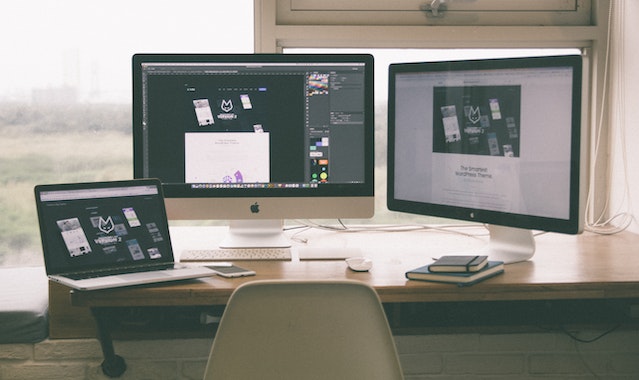
Hey there, fellow tech enthusiasts! Welcome to my blog, I am excited to delve into the fascinating world of website user experience (UX) and user interface (UI) design. In this post, I’ll share some insights and observations about these crucial aspects of web development that have a profound impact on our digital interactions. So, fasten your seatbelts, because we’re about to embark on an exciting journey into the realm of captivating websites!
[/et_pb_text][et_pb_text _builder_version=”4.21.0″ _module_preset=”default” global_colors_info=”{}”]Understanding the Difference between UX and UI:
[/et_pb_text][et_pb_text _builder_version=”4.21.0″ _module_preset=”default” global_colors_info=”{}”]First things first, let’s clarify the distinction between UX and UI. UX design focuses on creating a seamless and enjoyable experience for users while they navigate through a website. It encompasses aspects such as information architecture, interaction design, and usability testing. On the other hand, UI design deals with the visual elements that users directly interact with, including buttons, menus, icons, and overall aesthetics. While distinct, UX and UI are interconnected and must work harmoniously to provide an exceptional user experience.
[/et_pb_text][et_pb_text _builder_version=”4.21.0″ _module_preset=”default” global_colors_info=”{}”]Prioritizing User-Centric Design:
[/et_pb_text][et_pb_text _builder_version=”4.21.0″ _module_preset=”default” global_colors_info=”{}”]In today’s fast-paced digital landscape, users have become more discerning, expecting intuitive interfaces and effortless experiences. To meet these expectations, it is crucial to adopt a user-centric design approach. This involves empathizing with users, understanding their needs, and tailoring the design accordingly. Conducting user research, creating user personas, and performing usability testing are effective strategies to gain valuable insights and ensure a user-centric design.
[/et_pb_text][et_pb_text _builder_version=”4.21.0″ _module_preset=”default” hover_enabled=”0″ global_colors_info=”{}” sticky_enabled=”0″]Embracing Minimalism and Simplicity:
[/et_pb_text][et_pb_text _builder_version=”4.21.0″ _module_preset=”default” global_colors_info=”{}”]In the pursuit of exceptional user experience, less is often more. The minimalist design approach, characterized by simplicity and clarity, can significantly enhance website usability. By eliminating clutter, reducing visual noise, and focusing on essential elements, websites can provide users with a streamlined and intuitive experience. Remember, a clean and well-organized UI not only enhances aesthetics but also improves usability and accessibility.
[/et_pb_text][et_pb_text _builder_version=”4.21.0″ _module_preset=”default” global_colors_info=”{}”]Consistency and Familiarity:
[/et_pb_text][et_pb_text _builder_version=”4.21.0″ _module_preset=”default” global_colors_info=”{}”]Consistency plays a vital role in building user trust and familiarity. When users navigate through a website, they subconsciously seek familiar patterns and conventions. By adhering to established design principles and maintaining consistency in layout, typography, color schemes, and navigation, we can create a sense of familiarity that makes users feel at ease. Implementing intuitive navigation menus and clear visual hierarchies further enhances the user experience.
[/et_pb_text][et_pb_text _builder_version=”4.21.0″ _module_preset=”default” global_colors_info=”{}”]Mobile Responsiveness: Designing for All Devices:
[/et_pb_text][et_pb_text _builder_version=”4.21.0″ _module_preset=”default” global_colors_info=”{}”]With the proliferation of smartphones and tablets, ensuring mobile responsiveness has become an absolute necessity. A large portion of website traffic now originates from mobile devices. Therefore, it’s crucial to design websites that adapt seamlessly across various screen sizes and resolutions. Responsive design techniques, such as flexible grids and media queries, enable websites to deliver a consistent and optimized experience across different devices, enhancing user satisfaction.
[/et_pb_text][et_pb_text _builder_version=”4.21.0″ _module_preset=”default” global_colors_info=”{}”]Iterative Design and Continuous Improvement:
[/et_pb_text][et_pb_text _builder_version=”4.21.0″ _module_preset=”default” global_colors_info=”{}”]Website design is an iterative process that requires continuous improvement based on user feedback and data analysis. By monitoring user behavior through analytics tools, we can gain valuable insights into how users interact with our websites. This data-driven approach allows us to identify pain points, optimize user flows, and make informed design decisions. Remember, the journey to creating exceptional user experiences is an ongoing process that requires constant adaptation and evolution.
[/et_pb_text][et_pb_text _builder_version=”4.21.0″ _module_preset=”default” global_colors_info=”{}”]Conclusion:
[/et_pb_text][et_pb_text _builder_version=”4.21.0″ _module_preset=”default” global_colors_info=”{}”]Designing websites with a focus on user experience and user interface is an art form that requires a deep understanding of user behavior, design principles, and technological trends. I’m thrilled to be part of this ever-evolving field. By prioritizing user-centric design, embracing simplicity, consistency, and mobile responsiveness, we can create captivating websites that delight users and leave a lasting impact. So, let’s continue pushing the boundaries of UX and UI design, making the web a more user-friendly and enjoyable space for all!
[/et_pb_text][/et_pb_column][/et_pb_row][/et_pb_section]